The best gifts under 50 dollars are not products. They are categories. Buy into the right one — a tumbler, a class, a small wool thing, a candle that behaves — and the price tag disappears. Buy into the wrong one, and no amount of ribbon saves you.
We used to sit through markdown meetings where a $60 scarf was repriced to $29.99 and called a gift. The trick still works in reverse: the gift that reads expensive is the one chosen with a reason attached. Below are the categories that earn their keep, and the ones that quietly don't.
For proof the budget holds, Giftsicle's editors' gift list puts a well-known insulated tumbler at $35 and an online MasterClass subscription at $15 — both comfortably inside the line, and both carrying a name the recipient will recognise. That is the pattern this guide follows: small spend, familiar quality.
What makes a gift look more expensive than it is?
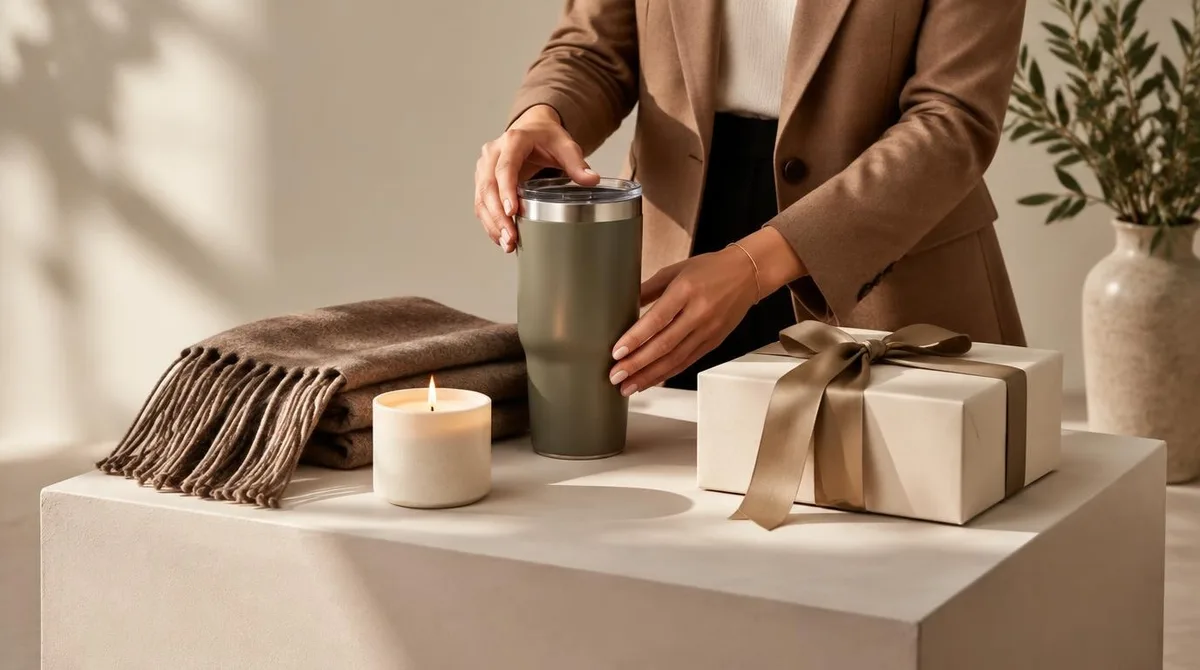
Weight, finish, and a name the recipient has heard of. A $35 tumbler reads like a $70 one because the object itself does the talking — it is heavy, it closes with a click, it keeps ice. The lesson generalises: under $50, buy objects with one obvious, tactile quality. Skip anything whose appeal depends on packaging or a slogan.
Our analysis, after years of reading garment labels and price tickets: the gap between a $20 gift and a $50 gift is mostly presentation of the same idea. Pick the category well and the number stops mattering.
Which categories earn the budget?
- Drinkware with a mechanism. An insulated tumbler or a proper pour-over setup. The object is used daily, so cost-per-use collapses to pennies. Giftsicle's list, cited above, shows exactly this tier priced at $35.
- A skill, not a thing. A short online class at around $15, per the same list, is the rare gift that grows. It suits the person who has everything because it takes up no shelf.
- One good wool accessory. A merino beanie or gloves. Merino is soft, regulates temperature, and doesn't itch the way cheaper acrylic does. Our Mid-Tier Merino Edit explains why the fibre punches above its price; the same logic applies to a $40 accessory.
- A candle with a short ingredient story. Soy or coconut wax, a cotton wick, one scent described in plain words. What this means in practice: if the label reads like a perfume advert, put it down.
- Small leather goods. A cardholder, not a bag. Less material, less cost, and the quality shows at the edges — which is where you should check the stitching anyway, as our guide to identifying quality seams sets out.
Which gifts quietly cheapen the gift pile?
Novelty anything. A mug with a joke on it has a shelf life of one laugh. Same for heavily scented 'bath sets' — the plastic basket is the tell. And be wary of mini versions of luxury products: a travel-size serum at $28 is a marketing decision, not a bargain, because the price per millilitre is usually worse than the full size.
One more to avoid: anything that needs explaining. If you have to say 'it's actually really good' before they open it, the category has already failed.
How do you check quality in a shop in under a minute?
Three checks, no calculator needed. First, the fabric label — read it before you touch anything, as our fabric label guide recommends; a high natural-fibre percentage beats a soft-feeling synthetic every time. Second, the hand: does it feel dense or hollow? Third, the seams and edges, which we cover in the seam-checking guide linked above. Dense fabric and finished edges at $45 beat floppy fabric and raw cuts at $50. We covered a connected angle in Fabric quality guide: How to read a fabric label before you buy.
For cashmere specifically, the budget tier is workable if you know what to compromise on — our cashmere versus merino answer argues that merino often wins outright under $50.
What about presentation?
Wrapping is the cheapest upgrade available and the most skipped. Plain kraft paper, one wide ribbon in a single colour, a handwritten tag. Total cost: a few dollars. Perceived cost: whatever the object inside is worth plus ten. The one mistake to avoid is over-wrapping — three layers of tissue reads as apology, not luxury.
Timing matters too. Buy wool and drinkware in the quiet weeks, not the peak ones, and the same $40 goes further. Our winter accessories edit makes the case for buying these categories once, properly, rather than twice in a panic.
Where should you spend the full $50 — and where should you stop at $25?
Spend toward the top of the budget on things that touch skin or get used daily: wool, drinkware, a cardholder. Stop at $25 on anything decorative, because decoration is where cheap materials show first. This is the same splurge-versus-save logic we apply to a whole wardrobe in Where to Splurge on Basics — and Where to Save, just compressed into one gift.
The closing thought, then, is the one we opened with. A gift under $50 doesn't look like it when the category does the work: a familiar name on a useful object, a natural fibre at the right weight, a class instead of clutter. The price tag is an opening offer. The category is what closes it.