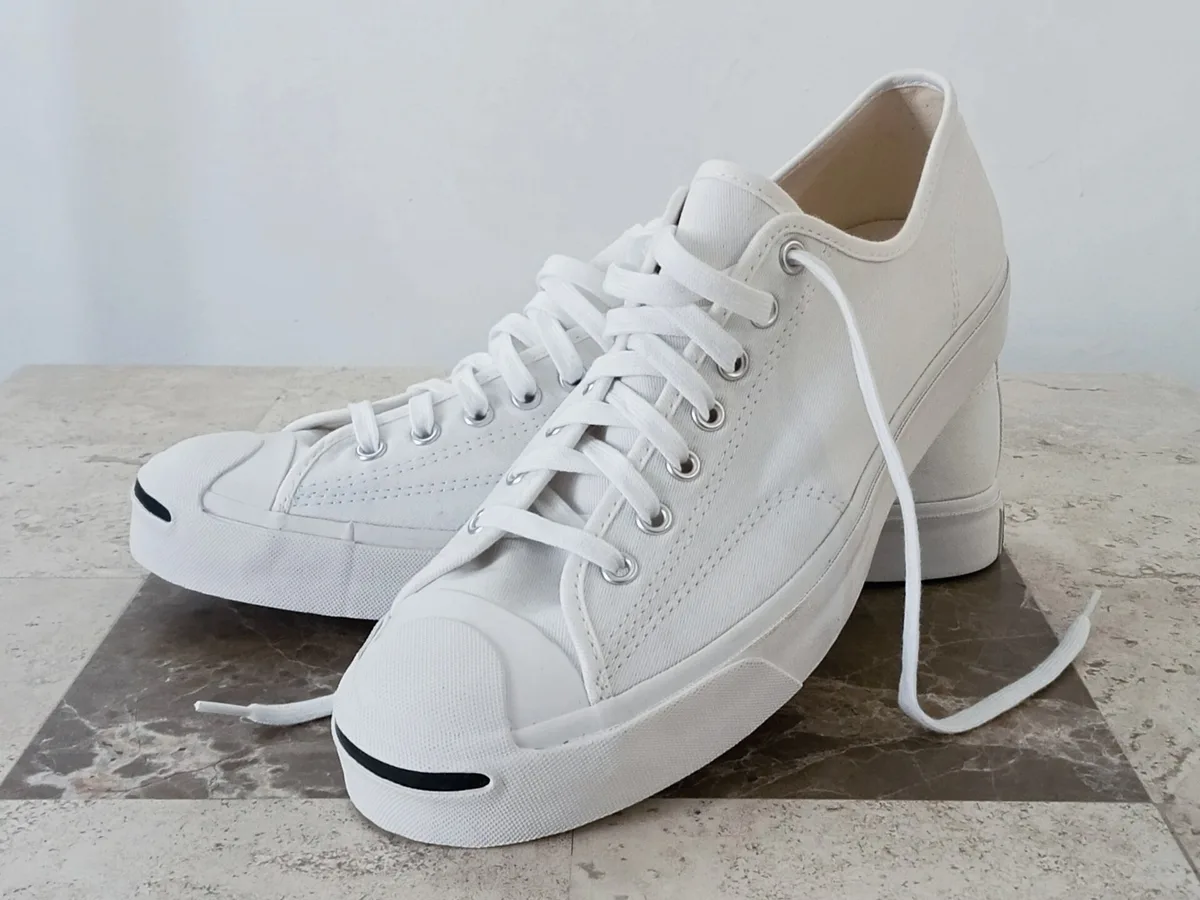
White sneakers are the rare shoe that works with nearly everything, which is why every price tier makes one. The honest answer to this comparison: at $40 you are buying a decent shoe that will not last long, at $90 you are buying most of the durability you will ever need, and at $200 you are paying partly for craft and partly for a name. The jump from $40 to $90 is where the money works hardest.
This is a tier edit, not a shopping list. We are arguing about what changes between the tiers — leather grade, stitching, insole construction, the option to resole — so you can decide which tier fits your wear pattern. If you wear white sneakers twice a month, the arithmetic is very different from someone who wears them four days a week. Cost per wear, not sticker price, settles this.
Before the tiers, one note on why the color itself is a commitment. White is the color most often linked with cleanliness and newness — Wikipedia notes that surveys in Europe and the United States associate white most often with cleanliness, honesty and perfection — which is precisely why scuffs and yellowing show so badly. You are not just buying a shoe; you are signing up for maintenance. That maintenance burden is the same at every price. The difference is how well the shoe survives it.
What actually changes as the price rises?
Three things, in roughly this order of importance. First, the leather: a cheap white sneaker usually uses a heavily corrected or coated leather — a split hide with a printed, plastic-like finish — while a mid-tier shoe typically uses full-grain or at least decent top-grain leather that creases softly instead of cracking. Second, construction: how the upper is attached to the sole, whether the stitching is even and load-bearing or decorative, and whether the insole is a shaped piece of foam or a flat card. Third, and only at the top tier, branding and finishing: hand-cut panels, better eyelets, a resoleable construction.
Notice what is not on that list: comfort out of the box. A $40 sneaker with a thick foam midsole can feel better on day one than a $200 leather one with a stiff sole that needs breaking in. Immediate comfort is the cheapest thing in footwear to fake and the first thing a good buyer stops trusting. Judge the shoe at week six, not hour one.
What does $40 buy you?
A competent, disposable shoe. At this tier you should expect a coated or synthetic upper, glue-dominant construction, and a lifespan measured in one to two seasons of regular wear. That is not a condemnation — for a shoe you wear occasionally, or one you expect to get filthy at a festival, disposable is the correct purchase. The mistake is buying a $40 sneaker for daily wear and being surprised when the coating cracks at the flex point and the sole separates at the toe.
Two checks before you buy at this tier, both borrowed from our guide to How to Identify Quality Seams Before You Buy Clothing: run a finger along the seam where the upper meets the sole and look for gaps or glue bleed, and press the toe — if the upper feels like painted plastic rather than skin, you know what you are holding. Buy it, enjoy it, and budget for replacement rather than repair.
What does $90 buy you?
This is the sweet tier, and our argument is that for most readers it is the right one. At around $90 you typically get real leather that cleans and ages properly, a cupsole or vulcanised construction that holds through resoling at some cobbles, and an insole you can actually replace. The shoe will crease, which is what good leather does, and it will take a cleaning rather than demanding a bin. Worn weekly and maintained, a shoe at this tier can plausibly serve for several years — which puts its cost per wear below the cheap pair you replace annually.
The discipline at this tier is refusing to pay for features you will not use. If a mid-tier pair charges a premium for a collaboration, a special edition color or a designer name on the tongue, you are back to paying for branding. The plain, unbranded version of the same construction is the value play. Check the fabric label and care instructions before committing — our fabric label guide explains what the lining and upper materials tell you about how the shoe will age.
What does $200 buy you?
Some real things and one expensive thing. The real things: finer leather with a tighter, more even grain; hand-finished edges; stitching that is structural rather than ornamental; and often a construction a cobbler can genuinely resole, which extends the shoe's life well past what the upper-tier price suggests. If you wear white sneakers most days and value the idea of one pair resoled twice rather than three pairs binned, the arithmetic can work.
The expensive thing is the logo. A meaningful slice of a $200 sneaker's price is marketing, collaborations and brand positioning, not materials. There is nothing wrong with buying the brand if the brand gives you pleasure — style is a legitimate purchase reason, and we do not judge it. But be clear-eyed about which portion of the price is craft. Our honest read: at this tier you are often paying a premium for the same leather a $90 shoe already carries, plus the name. If the $200 pair's construction is not resoleable, you are paying top tier for a mid-tier lifespan.
What this means for your buying decision
Practical steps, in order. First, count your wears honestly: if white sneakers are a two-day-a-week shoe for you, start at the $90 tier and stop looking. Second, at any tier, inspect construction before color — even stitching, clean sole attachment, an upper that feels like leather rather than lacquer. Third, price the maintenance: white leather needs cleaning products and a bit of routine, and that cost is identical whether the shoe cost $40 or $200. Fourth, if you go high, confirm the shoe can be resoled; that single feature is what separates a purchase from a lease.
It is also worth placing this edit in the wider wardrobe arithmetic. We have made the same tier argument for loafers at three price tiers, where the extra money more clearly earns itself, and for the broader question of where to splurge on basics and where to save. Sneakers sit in an awkward middle: unlike a loafer, a sneaker's sole wears out on a schedule no cobbler can extend forever, which caps the return on any premium. That is the structural reason the $90 tier wins here while a higher tier wins elsewhere. Readers following this should also see Loafers at Three Tiers: Where the Extra Money Earns Itself.
The verdict: where the money earns itself
Buy $40 when the shoe is occasional or sacrificial. Buy $90 when it is a regular and you want real leather and repairability without funding a marketing department. Buy $200 only if you wear the shoe nearly daily and the specific pair offers resoleable construction — otherwise you are buying the name, and the name does not walk any better. The evidence in every tier comparison we run points the same way: mid-tier, bought deliberately, is where value lives. Keep the calculator out, check the seams, and remember the price tag is an opening offer.