Boston rewards shoppers who plan by neighborhood, not by brand. The same city holds a flagship strip where a coat costs a week's wages and a consignment row where the same coat arrives two seasons later at a fraction of it. The trick is knowing which streets do which job.
This walkthrough covers the city's main retail corridors street by street, with a note on what each does well and what it does badly. The best street, in the plain dictionary sense of most suitable or desirable, is the one that matches your budget and your errand — not the one with the most awnings. Cambridge Dictionary defines "best" as most satisfactory, suitable, or useful, and that is exactly the standard we apply here.
What makes a shopping street worth your time?
Three things: density, mix, and honesty of pricing. Density means you can compare several shops in an hour without a train ride between them. Mix means flagships, independents, and resale sit close enough to price-check each other. Honesty means the window price is roughly the register price.
Boston scores well on all three, but not on the same streets. Back Bay scores on density and mix. Beacon Hill scores on mix and charm, less on density. Downtown Crossing scores on price honesty, if not on atmosphere. Plan the day around which of the three you need most.
Newbury Street, Back Bay: the flagship mile
Newbury Street is the city's showcase, and it behaves like one. Victorian brownstones house international flagships, national chains, and a scatter of salons and galleries between them. The block is long — it runs from the Public Garden toward the Massachusetts Avenue end — and the character shifts as you walk it. The Garden end skews luxury and tourist traffic; the far end loosens up into independents and student budgets from the nearby colleges.
Our analysis: shop Newbury for fit and service, not for value. This is where you go to try the thing on, learn your size in a difficult cut, and then decide whether the price is an opening offer. It usually is. Full-price retail on this street is rarely the smartest version of the purchase, and the street knows it — end-of-season markdowns here can be genuinely sharp. If you pay full freight on Newbury, do it for something you have already decided is worth owning, not for something you discovered an hour ago.
Practical steps: park the car once, walk the length, and note prices before you buy anything. The same national chains on this street appear in malls elsewhere at identical prices, so spend your Newbury hours on the stores you cannot find anywhere else.
Charles Street, Beacon Hill: small shops, small stakes
Charles Street is a short, brick-sidewalk run of antiques dealers, boutiques, gift shops, and one or two respectable secondhand stores. Nothing here is cheap, but almost nothing is a rip-off either. The street trades in the middle: a scarf, a used book, a piece of furniture, a piece of jewelry with a history.
This is the street for the patient browser. Inventory in the antiques and consignment shops turns over constantly, so the winning move is repeat visits rather than one determined sweep. If you are furnishing a flat or hunting an accessory that nobody else will have, Charles Street pays. If you need a plain white shirt by tomorrow, it does not.
Downtown Crossing and Washington Street: where the discounts live
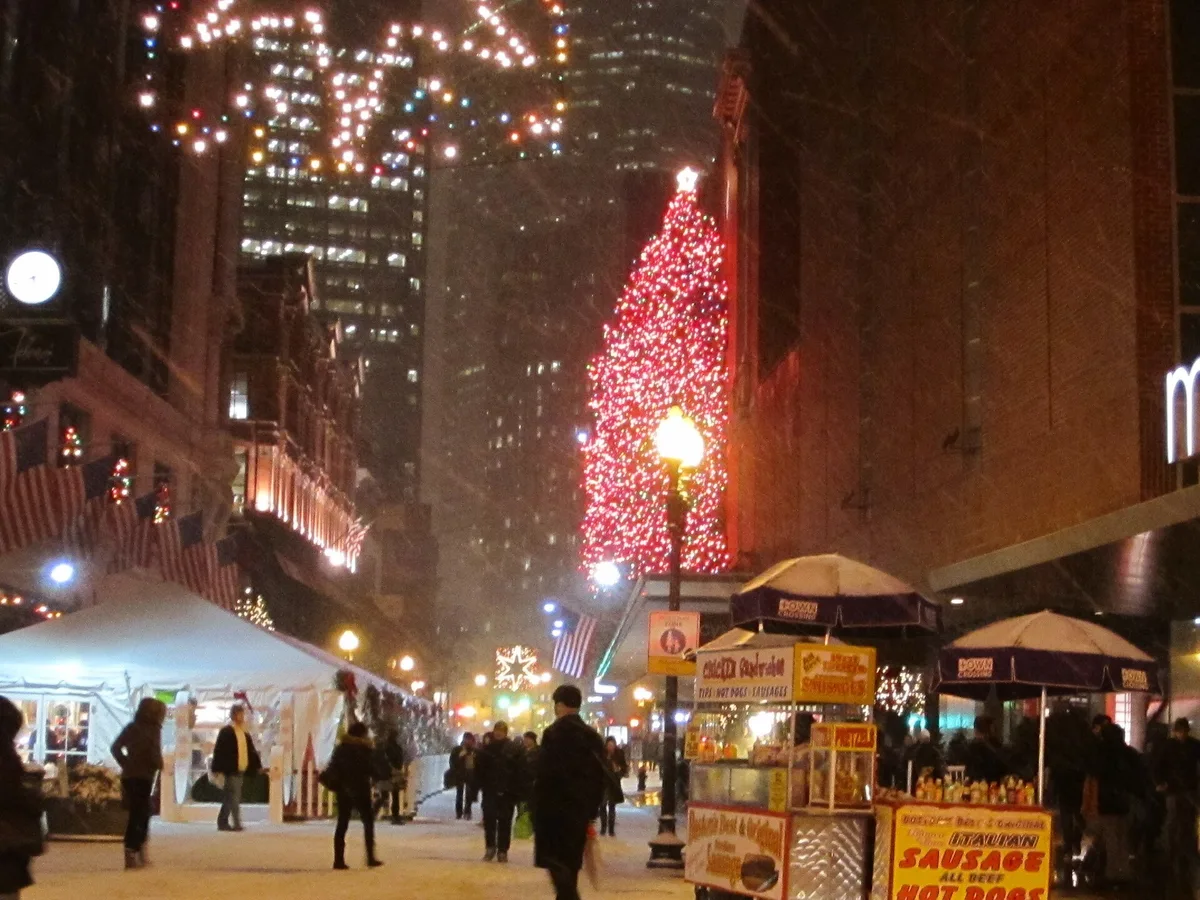
Downtown Crossing is Boston's pedestrian retail core, and its personality is discount-forward. Department-store anchors, off-price retailers, and a scruffier independent layer crowd a few compact blocks. The area has thinned and thickened over the decades, but its function has stayed constant: this is where the city buys at a markdown as a matter of course, not as an event.
The value case here is straightforward. Off-price retail — last season's stock, overruns, and closeouts at reduced prices — rewards shoppers who know what an item should cost new. That skill transfers from our other coverage: reading a fabric label before you buy matters twice as much when the rack is mixed and the clock is ticking. Check seams, check fibre content, and check whether the "original" price on the tag is a real reference or a fiction. Markdown culture manufactures original prices the way a kitchen manufactures stock.
The South End and SoWa: independents and resale
The South End runs boutiques, design shops, and some of the region's better consignment and vintage dealers, with the SoWa market district adding a weekend market layer of makers and small vendors. The consignment end is the story for budget shoppers. Gently worn designer stock — coats, bags, shoes — appears here at prices that make the flagship math look silly, provided you accept a second owner and a bit of hunting.
Consignment shopping rewards exactly the habits we argue for across this site: know the quality markers before you go, and judge the garment rather than the label. A well-made coat from three owners ago beats a poorly made one from last season. Our trench coat comparison at three price tiers makes the point in detail: construction, not branding, is what the extra money should buy, and resale is where that construction comes discounted. We covered a connected angle in Loafers at Three Tiers: Where the Extra Money Earns Itself.
Harvard Square and the college corridors: cheap, cheerful, fast
Cambridge's Harvard Square, and to a lesser degree the strips around Boston's universities, serve a customer base with more time than money. Expect national fast-fashion chains, used-book and used-clothing shops, and a rotating cast of student-oriented independents. Prices run low; quality runs lower; turnover runs fastest.
The honest assessment: this is the tier where the cheapest option often wins outright, because the garment is not designed to last long enough for durability to matter. Buy the trend piece here if you must, and spend the serious money where it compounds — the argument we make in straight jeans at three prices applies to most denim and knitwear: mid-tier frequently beats both ends on cost per wear.
How the streets compare by budget
| Street | Budget tier | Best for | Weak spot |
|---|---|---|---|
| Newbury Street | High | Flagships, fit and service, end-of-season markdowns | Full-price value is poor |
| Charles Street | Mid | Antiques, consignment, gifts with history | Low density, unpredictable stock |
| Downtown Crossing | Low to mid | Off-price and markdown shopping | Mixed quality, thin atmosphere |
| South End / SoWa | Mid, with resale bargains | Consignment, vintage, makers | Weekend-dependent, hunting required |
| Harvard Square | Low | Trend pieces, used goods, student budgets | Short garment lifespans |
What this means for your next trip
Match the street to the errand. A planned purchase you have researched belongs on Newbury or in the South End's consignment shops, depending on whether you want it new. A hunt — for a coat, a bag, a one-off — belongs on Charles Street or in the South End, with repeat visits. A cheap top-up or a trend experiment belongs in Downtown Crossing or Harvard Square, where a mistake costs little.
And keep the calculator habit wherever you go. The price tag is an opening offer on every one of these streets; the difference between a good shopper and an expensive one is knowing which offers to accept. For more argued selections and price-tier comparisons, browse our shopping coverage, and for the wardrobe-building logic behind most of these purchases, see our guide to wardrobe staples worth buying once and our take on where to splurge on basics and where to save. Style context for building outfits from what you find lives in our style section. Readers following this should also see Five Wardrobe Staples Worth Buying Once.
The evidence here establishes the shape of the city's retail map: a flagship corridor, a consignment belt, a discount core, and a budget tier. What remains unknown is any specific store's current stock or price — those change weekly, and the only reliable source is the shopfront itself. Verify before you buy, date your receipts, and return on principle when the goods do not match the promise.