Every dress code on an invitation is really one question: how dressed up is the room going to be? Black tie means the room will be at its most formal. Smart casual means polished but relaxed. Once you read the phrase as a description of the crowd rather than a rule about your outfit, choosing clothes gets much easier.
The trick is knowing where each code sits on the formality ladder, and what one step up or one step down looks like. That is what this guide covers, code by code, with the details that actually change an outfit: fabric, coverage, shoes and the third piece that finishes things off. If you are building the wardrobe behind these outfits rather than dressing for one night, our style guides cover the method side of that.
What does black tie actually mean?
Black tie is the most formal code most people will ever receive. For men, it points to a tuxedo: a dinner jacket, usually black or midnight blue, with satin or grosgrain lapels, and a bow tie you tie yourself. For women, it means a floor-length gown or a very polished alternative — a tailored jumpsuit or a structured midi that reads as evening because of its fabric.
The honest signal of black tie is fabric weight and shine. Silk, satin, velvet and sequins belong here. Cotton does not. If your dress would look at home at a backyard barbecue, it is not a black tie dress, no matter how elegant the cut.
Shoes complete the register. This is the one code where sandals with a heel, or a formal pump, are doing real work. If you want a fuller argument for why footwear sets the tone before anything else, we made it in Where an outfit actually starts: an argument for the shoes.
What about formal, black tie optional and creative black tie?
These three sit just under black tie, and hosts use them for different reasons.
- Formal behaves like black tie with slightly more room. A dark suit with a tie works for men. A long gown or a dressy cocktail-length dress works for women.
- Black tie optional means the host is offering a choice. Tuxedo or dark suit; gown or best cocktail dress. Nobody is underdressed either way.
- Creative black tie keeps the evening register but invites personality — an unusual color, a playfully cut jacket, an unexpected accessory. The fabric rules still apply; the color rules loosen.
The safe read on all three: dress as if it were black tie, then subtract one element. You lose nothing by being the slightly more formal guest in a room of tuxedos. The reverse is uncomfortable.
What does cocktail attire mean?
Cocktail is the code most weddings and evening parties use, and it is the one people second-guess most. It means dressy, not formal: a knee-length or midi dress, a suit in a color beyond navy or charcoal, or a separates combination with real structure.
Think of cocktail as black tie's daytime cousin. The hemlines rise, the fabrics can matte down, and a blazer counts as eveningwear. What drops you out of cocktail territory: denim, anything too casual in texture, and shoes you would wear to run errands.
Retailers organize their offerings around exactly this occasion logic. As PrettyLittleThing frames its dress range, sequin styles are pitched for the big-deal events on a social calendar while simpler smock dresses are styled with sandals for casual days — the same spectrum an invitation is describing when it moves from black tie down to casual.
How is semi-formal different from cocktail?
In practice, very little. Semi-formal is the afternoon and daytime version of the same register. A suit and tie, a dress with a jacket, or polished separates all qualify. The main difference is light: daytime semi-formal tolerates lighter colors and lighter fabrics, while evening cocktail pulls slightly darker and dressier.
If an invitation says semi-formal for an evening event, treat it as cocktail. If it says cocktail for a morning wedding, treat it as semi-formal. The two codes share a wardrobe; the clock decides the styling.
What does smart casual mean — and how is it different from business casual?
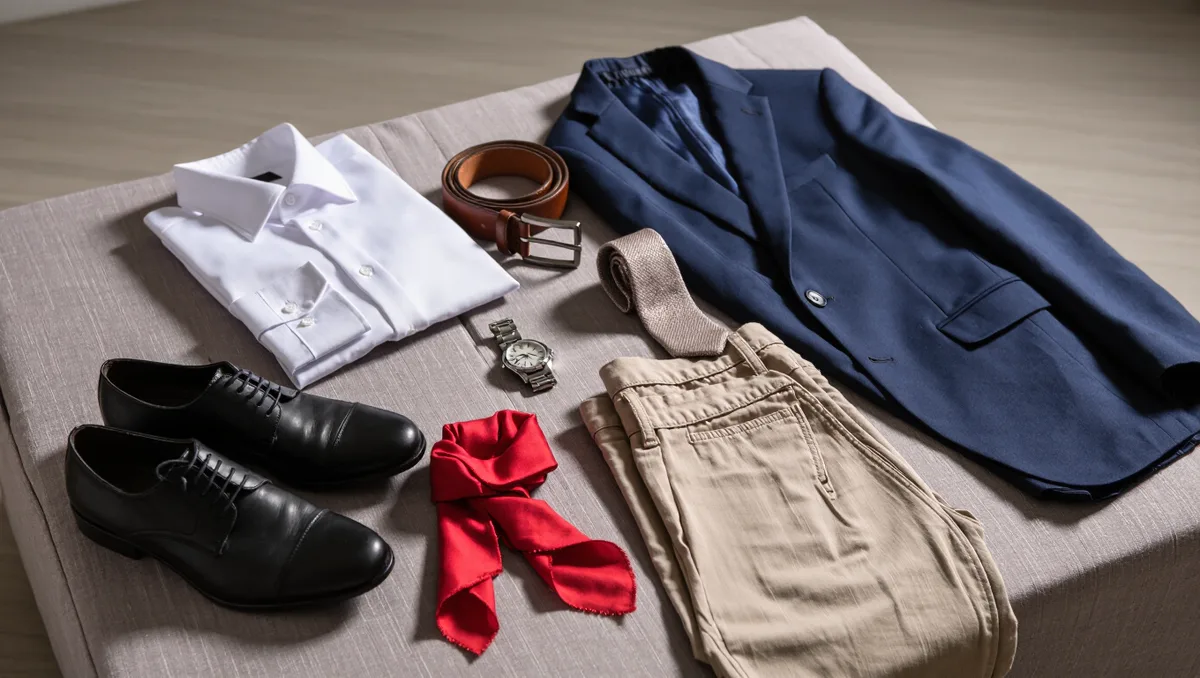
Smart casual is the hardest code to pin down because it spans the widest range. The reliable definition: one clearly dressed-up element on an otherwise relaxed outfit. Tailored trousers with a fine knit and clean sneakers. A blazer over a good t-shirt. A crisp shirt with dark, unfaded denim.
Business casual is narrower. It borrows from the office: chinos or tailored trousers, a collared shirt or blouse, closed shoes. Denim is usually out; a blazer is usually in. Smart casual lets you bend those rules as long as the whole still looks deliberate.
When you are unsure between the two, look at the venue on the invitation. A restaurant reservation suggests smart casual. An office-adjacent venue or a work-adjacent host suggests business casual. And if the whole idea of a dressed-up-but-relaxed outfit feels foreign, the third piece rule is the fastest fix: add one structured layer to an otherwise simple outfit and it reads intentional.
What counts as casual — and when is casual a trap?
Casual means what it says: you will not be out of place in jeans, a tee and flats. But casual invitations still reward effort. Clean, well-fitting casual clothes read very differently from laundry-day clothes, and the difference is fit, not price. Proportion is what makes a simple outfit hold together, which we argue in Proportion, not price, is why some outfits hold together.
The trap is a casual dress code at an event with formal surroundings — a casual-code wedding in a grand venue, for example. In that case, split the difference: keep the relaxed silhouette but upgrade the fabric and shoes. Texture does the lifting when the formality is ambiguous, a point we explore in Texture contrast: the styling tool that works when color can't.
What this means: a quick method for any invitation
Here is the sequence we use, and it works for any code you have not met before.
- Find the code on the ladder. Place it between casual and black tie. Most codes are obvious once you stop treating the phrase as a costume instruction.
- Read the venue and the hour. Evening pulls dressier. Grand rooms pull dressier. Daytime and outdoors pull lighter.
- Dress one step up, then subtract. Being slightly more formal than the room is safe. Being slightly less is not.
- Check fabric before silhouette. A simple cut in an evening fabric beats a dramatic cut in a casual one.
- Finish with the third piece. A jacket, a wrap or a structured bag closes the gap between almost-right and right.
One last note on weddings specifically: never wear white, ivory or anything close to it, and let the couple's stated code win over your own preferences. The invitation is the host's taste on paper. Your job is to meet it halfway — dressed with intention, never in competition with the room.
None of this requires a large budget or a specific body type. Dress codes are a vocabulary, and vocabulary is learned. Once you can hear the register in the phrase, every invitation becomes easier to answer — and the wardrobe behind it gets smaller, because one good cocktail outfit and one good formal outfit cover most of the calendar you actually have.