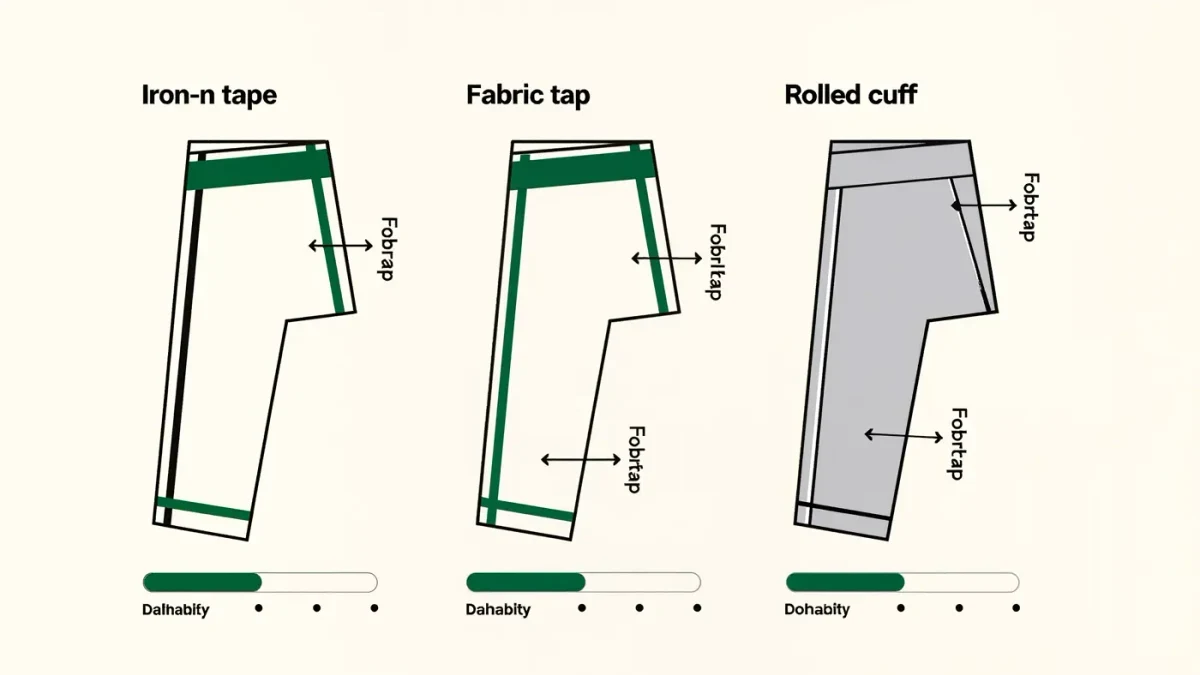
A temporary hem needs three things: an adhesive or fold that holds through a full day, a finish that looks flat from the outside, and an exit plan that does not damage the fabric. Iron-on hem tape, fabric double-sided tape, and the rolled cuff cover nearly every situation, and the right choice depends on how long the fix must last — one evening, one season, or until a tailor opens again. Start with iron-on tape; it is the only no-sew method that survives washing, and it takes fifteen minutes.
Zebule publishes information, not repair or shopping advice; test every adhesive on an inside seam allowance first, especially on delicate or dry-clean-only fabrics.
How do you hem trousers with iron-on hem tape?
- Determine the finished length first. Put the trousers on with the shoes you actually wear them with, fold the excess up inside, and pin or clip at the correct height on both legs. Measure the fold depth on each leg separately — most bodies are not symmetrical, and a half-centimeter difference shows.
- Press the fold with an iron to set a crease line, then turn the trousers inside out. Trim the raw edge to about 3 centimeters below the crease if there is a lot of excess fabric; bulk is what makes temporary hems look homemade.
- Slide a strip of hem tape inside the fold, just below the crease, around the full leg circumference. Leave the tape's paper backing on until each section is positioned; it goes between the fold and the leg, not between iron and fabric.
- Press section by section with a hot iron through a pressing cloth, holding 8 to 10 seconds per spot — steam off unless the tape's instructions say otherwise. Move methodically around the leg rather than spot-pressing at random; gaps are where hems open first.
- Let the hem cool flat before wearing — the adhesive bonds as it cools, not while hot. Turn right-side out and check the outer face for shine marks; if the iron left any, the pressing cloth was too thin.
The tape hem changes the trouser from altered to wearable in one session and typically survives several wears and a gentle wash. Skip it on wool you dry-clean — dry-cleaning solvent dissolves many hem adhesives — and on any garment you plan to alter permanently later; tape leaves residue that a tailor will charge extra to remove.
When does fabric tape make more sense?
- Use double-sided fabric tape for same-day fixes: turn the fold up inside, tape the crease area in short strips, press firmly with your fingers for 30 seconds. No iron, so it works in hotel rooms and offices.
- Keep the fold shallow — 2 to 3 centimeters at most. Finger-pressed adhesive holds shallow folds; deep, heavy folds peel at the corners within hours.
- Expect one wear, and remove the tape the same evening. Leaving body-warmed adhesive on fabric overnight presses residue into the fibers and can mark light colors.
Fabric tape changes nothing permanent — which is its whole point before a fitting, a one-off event, or a pair you intend to return. Skip it on knits and loosely woven fabrics, where the tape grips threads rather than the weave and can pull them when peeled.
What about cuffs and rolling instead?
- Roll a deep, clean cuff for raw-hem or long jeans. Fold once about 4 centimeters, then once more; two crisp folds hold all day on denim, which is heavy enough to keep its own shape.
- For lighter trousers, secure the roll with two discreet stitches' worth of hem tape at the side seams only, or leave it unsecured and re-fold after washing. Side seams are the reference points that keep both cuffs the same height.
- Match the roll to the outfit's formality: a deep cuff reads deliberate on denim and chino twill, and out of place on suit trousers. Skip rolling on anything with a finished — stitched — hem at the wrong length; the old hemline will show inside the fold.
The cuff changes the silhouette slightly — it adds a band of visual weight above the shoe, which in fact can work in the outfit's favor with heavier footwear. It costs nothing and reverses in a minute.
How long does each fix last, and when do you go to a tailor?
Iron-on tape: several wears and washes, then expect lifting at the back seam where the leg flexes most. Fabric tape: one wear. Cuffs: indefinitely, as long as you enjoy the look. A temporary hem is the right answer while you test a length, bridge the wait for a tailor, or stretch a budget across a season — but for trousers worn weekly, a permanent hem costs little and behaves better through washing. The tell is maintenance: if you are re-fixing the same hem monthly, the fix has become the chore, and the tailor's fee has quietly become the cheaper option.
Sources for this piece include the BLS Occupational Outlook on professional tailors.