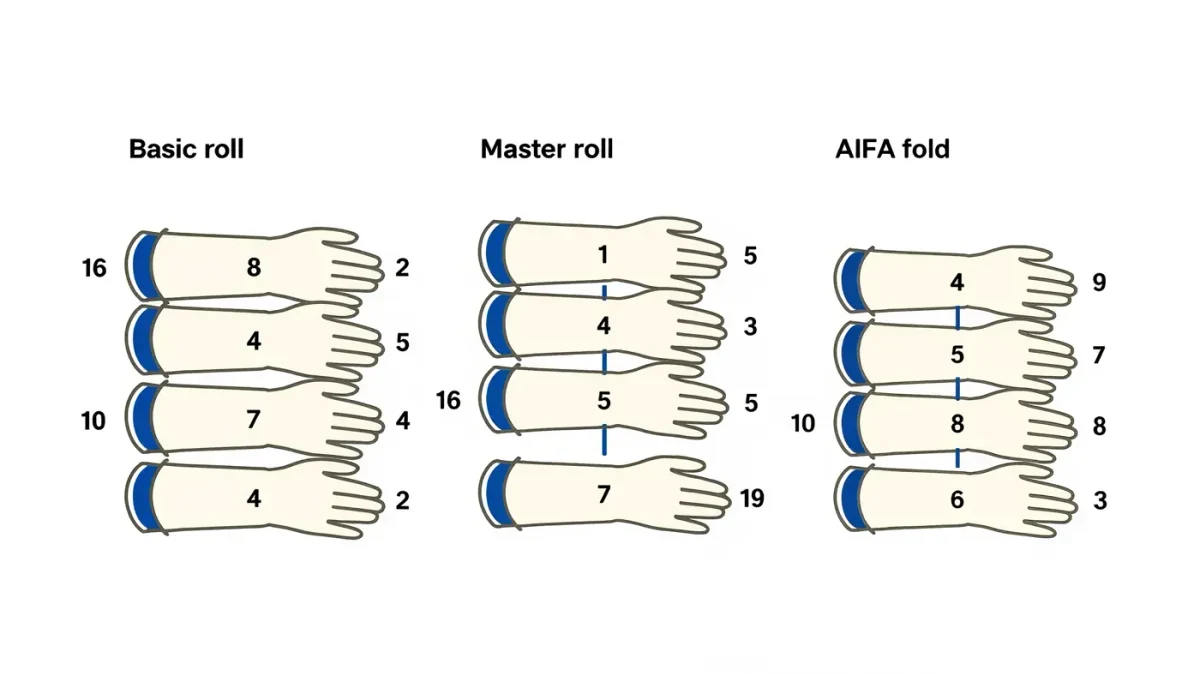
The basic roll, the master roll, and the AIFA fold are the only three sleeve-rolling methods you need, and the choice comes down to fabric weight and how long the roll must survive the day. The basic roll suits light cotton and takes ten seconds; the master roll holds through a full workday on oxford cloth; the AIFA fold keeps a crisp band of cuff visible above the roll, which reads more deliberate at the office. Start with the basic roll to calibrate your width, then move up.
Zebule publishes information, not styling or shopping advice; adapt the technique to your own shirts and workplace.
Why do rolled sleeves sag by midday?
Two reasons: the roll is too wide, and the fabric is too heavy for the method. A wide roll relies on friction between layers, and thick fabric exerts more outward pressure at the elbow, which walks the roll down the arm. The fix is built into each method below — narrower bands, and for heavy cloth, a method that locks the fabric instead of pinching it. Shirt weight matters more than sleeve length here: a chambray shirt behaves like a poplin, a flannel behaves like a light jacket.
How do you do the basic roll?
- Unbutton the cuff and the button one above it — the whole sleeve placket too if the shirt has one. Skipping the placket button is the single most common cause of a sleeve that will not stay past the elbow.
- Flip the cuff back once, inside out, to just above the elbow. The cuff should sit flat, not twisted; a twisted first fold causes every later fold to spiral.
- Roll the cuff up again in bands about 4 centimeters wide — roughly two fingers — tucking the sleeve's back edge slightly as you go so each band lies on top of the previous one. Stop at or just below the elbow bone.
- Squeeze and slide. Grip the roll firmly for a second, then slide your fingers down from the middle of the band toward both edges. This flares the outer edge of the roll slightly and makes it look relaxed rather than uniformed.
- Check the mirror from arm's length. If the roll has crawled below the elbow within five minutes of normal movement, it is too wide: unroll, and redo in 3-centimeter bands.
The basic roll changes nothing structurally — it is speed and lightness. Skip it on anything heavier than mid-weight cotton; the bands will compress into one thick ring at the elbow and loosen within the hour.
How do you do the master roll?
- Lay the sleeve flat and pull the cuff back so the inner cuff lining shows, folding it up about 6 centimeters above the elbow. Do not roll yet — this is a fold, not a roll, which is why the method holds better.
- Fold the bottom of the sleeve up over the cuff, covering all but the top edge of the cuff. You now have two stacked layers with a sliver of cuff color showing at the top.
- Fold the whole stack once more, half the previous height. Each fold is progressively narrower, which is the mechanism that stops the roll from sliding — wide bands slide, tapering bands lock.
- Repeat until the roll sits just below the elbow, usually three to four folds on a standard sleeve. Tug the fabric below the roll gently to remove tension from the shoulder seam.
The master roll changes the silhouette: because folds taper, the sleeve reads fitted rather than bundled at the arm. It survives a full day on oxford and twill shirts. Skip it on silk and Tencel — crisp folds press permanent creases into fluid fabrics.
What is the AIFA fold and when is it worth it?
- Roll the sleeve once from the cuff, about 5 centimeters, keeping the cuff right-side out and visible.
- Roll twice more in the same width. Three even bands, cuff facing out the whole time — the cuff line stays visible as a thin border above the roll.
- Adjust the final position below the elbow and even out the bands so no single fold is thicker than the others. Uneven bands are what make a rolled sleeve look accidental.
The AIFA changes the message, not just the length: the visible cuff edge signals that the roll is intentional, which matters in offices where bare forearms sit next to jacketed ones. Skip it if the shirt's cuff lining contrasts strongly and you do not want the stripe — or use that contrast on purpose.
Which sleeves should you never roll?
Structured jacket sleeves, anything with a functioning buttoned placket designed to close at the wrist, and sleeves with heavy elbow reinforcement — blazers, suit jackets, chore coats with lined sleeves. Rolling distorts the sleeve's internal structure, and on tailored garments the distortion does not press out. For those, push sleeves up loosely instead of folding them, or take the jacket off. Knit sleeves are their own case: they stretch rather than hold, so any roll slides down within minutes — push them up and accept the slouch.
How do you stop roll marks on the forearm?
Alternate methods across days and unroll sleeves fully at the end of the day — the deep crease comes from the same band of fabric sitting in the same place for hours. If marks bother you, the master roll is kindest, because its folds sit at different heights rather than stacking in one ring. Cotton creases press out overnight on a hanger; linen and oxford may need a quick iron at the cuff, which is the honest cost of wearing sleeves rolled.
Sources for this piece include BBC Culture's coverage of dress history.