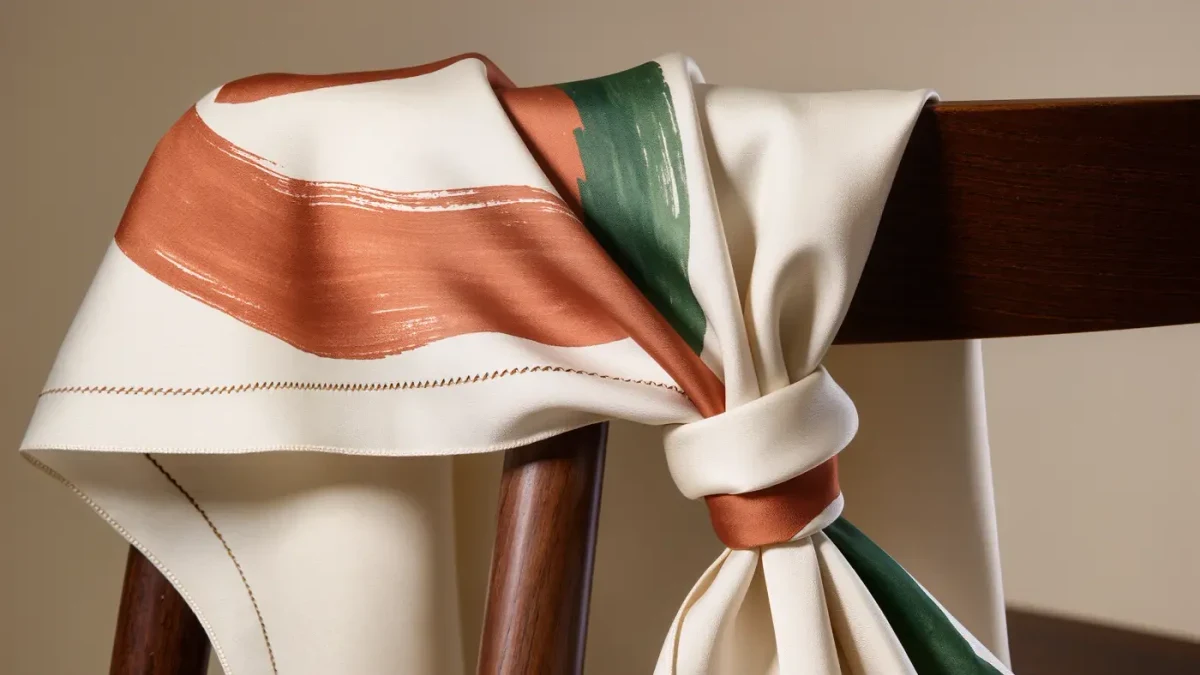
Every composed outfit has an invisible ingredient: the space where nothing happens. Painters call it negative space — the empty area around a subject that gives the subject its shape — and dressing borrows the concept directly. A bare ankle, an open collar, an unadorned neckline, a clean stretch of coat front: these gaps are not absences of styling. They are styling. This column argues that knowing what to leave out is the difference between an outfit that breathes and one that merely accumulates.
We take the art-literate position deliberately. Zebule treats style as composition — proportion, palette, and the space between — and no claim here depends on any individual's wardrobe or figure, only on how images work.
What is negative space in an outfit?
It is any area of the look left visually quiet: unbroken fabric, bare skin, plain ground. In a painting, the subject only reads because the space around it stays still. On a body, the same law applies. A sleeve detail, a necklace, a scarf, and an interesting hem all competing within one torso is a canvas with no focal point — the eye has nowhere designated to land, so it lands nowhere and calls the outfit boring. Remove two of the four and, counterintuitively, the remaining two become visible. Detail needs quiet around it to be seen at all.
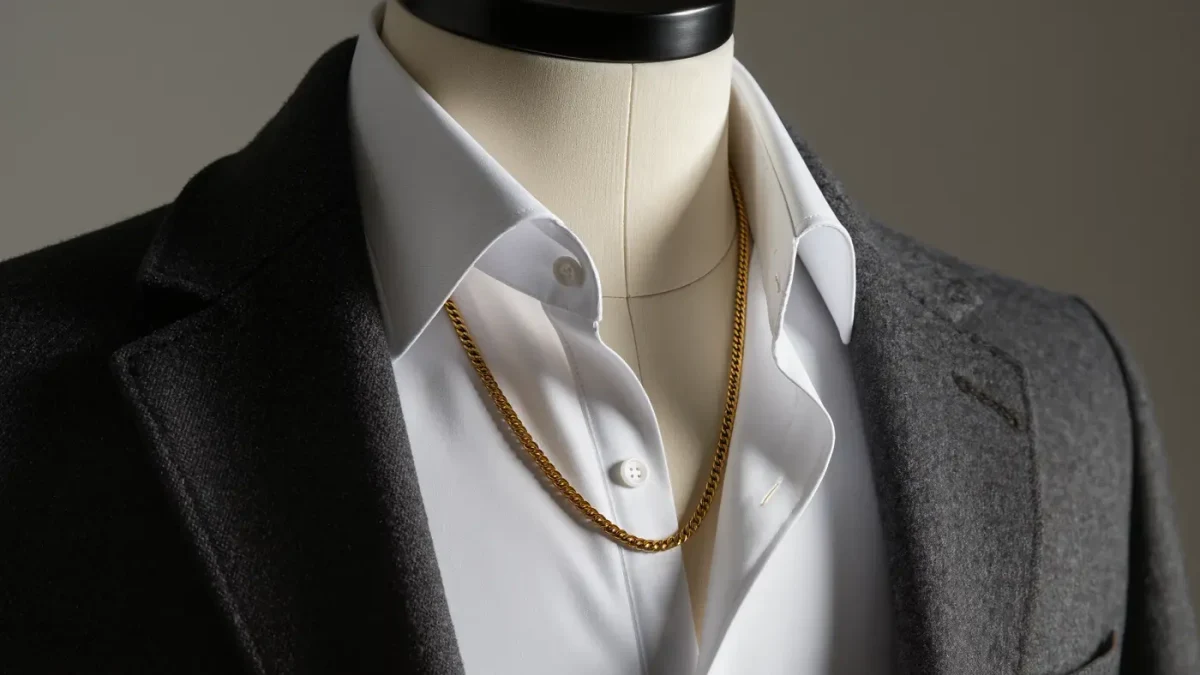
This is why the classic minimalist looks — a black turtleneck with one gold earring, a white shirt open at the collar under a plain blazer — photograph so well. The photograph has room to compose itself. Clutter denies the camera that room, which is why over-accessorized outfits flatter nobody in pictures even when they look acceptable in a mirror.
Where does an outfit need breathing room?
Four zones do most of the work. The neckline: an open collar or bare throat above a structured layer sharpens the face; buttoned-to-the-top under a crewneck does the opposite. The wrist: a cuff pushed back creates a sliver of skin that reads as ease. The ankle: the space between a cropped hem and a shoe is the single most exploited gap in modern styling — bare with loafers, sock-hidden with a cropped boot — because a defined hem line gives the leg a punctuation mark. And the outfit's mid-field: a clean front, unbroken by crossbody straps and belts and toggles, lets every other choice carry weight.
The crossbody bag deserves its own sentence. Few items erase an outfit's negative space faster, because a diagonal strap draws two lines across the most important zone. When the outfit is the point, carry something handheld or shoulder-hung; when the errand is the point, wear the crossbody and accept the trade. Knowing which outfit is which is half of practical style.
How much removal is too much?
Negative space has a failure mode too. Strip every detail and the look tips from composed into unfinished — the difference between a gallery wall and an empty one. The working ratio most stylists arrive at: one or two points of interest per outfit, everything else held quiet. A statement coat earns one quiet accessory. A detailed, textured knit earns plain everything else. The error is symmetrical in both directions — too many events and too few — and the fix is always the same question: what is this outfit about? One answer, held by force.
Jewelry obeys the same arithmetic, which is why the one-ring rule and its cousins exist. Three delicate chains layered together register as a single event, not three; a cuff stacked over a watch and two rings on each hand cancels whatever each piece contained individually. The curatorial standard borrowed from museums applies cleanly: give each object its own wall. A single strong piece on a bare neckline is an exhibition; the same piece among five is inventory. None of this is a verdict against abundance as a personal signature — it is a note that abundance works as a stated style, applied everywhere, far better than as an occasional default, applied by accident on hurried mornings.
The mirror test borrowed from picture editors
Picture editors judge images by squinting — blurring detail to see whether the composition holds. The same test works on outfits. Squint at yourself: if the silhouette still reads clearly as blocks of light and dark with one accent, the negative space is doing its job. If everything dissolves into mid-tone noise, something must go, and it is almost always the third-most-interesting thing in the look, not the first.
The thesis returns at the close: an outfit is composed of what you wear and delimited by what you refuse to. Removal is free, instant, and reversible — the rare styling tool with no price tag and no fitting. Start there before adding anything.
Sources for this piece include open-access art collections at the Smithsonian.