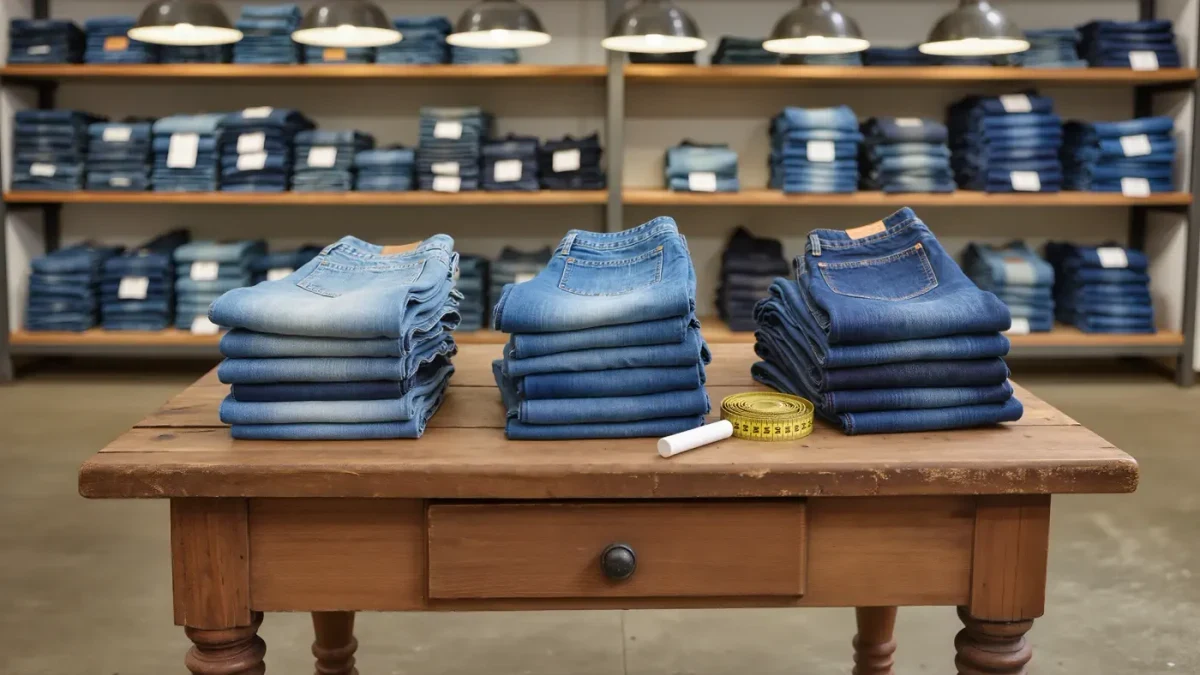
The same straight-leg jean hangs at $50, $150, and $300, and the honest difference is mostly denim weight and dye process — not shape. This guide walks the straight jean through its three price tiers, names the one detail worth paying the middle for, and shows where the top tier stops paying you back. Prices are market examples verified against typical retailer listings at last check, February 2026; if you buy through links in our shopping guides, Zebule may earn a commission at no cost to you.
What separates a $50 jean from a $150 one?
Fabric weight and how the indigo got there. The low tier, around $40–$70 at last check, is typically a lighter-weight denim — 9 to 11 ounces — woven with elastic blend and dyed with a surface-only process: the color washes out at the creases within a season. The middle tier, around $120–$180, is where selvedge and heavier weights begin: 12 to 14 ounce denim, often rope-dyed so the indigo core stays white and fades in streaks rather than blotches. The top tier, from $250 up, adds Japanese or American mills, cone-woven selvedge, and hidden rivets — real things, marginal to how the jean looks on you.
Is heavier denim actually better?
Heavier is stiffer and longer-lived, and also a commitment: 14-ounce denim takes weeks to break in and can feel like cardboard for the first month. The practical sweet spot for a first good pair is 12 to 13 ounces — enough body to hold a straight line down the leg, enough give to sit down in without negotiation. Lightweight denim under 11 ounces reads softer and creases at the knee by afternoon; it is a summer cut, not a year-round one.
The one detail worth the middle tier
Dye depth. Rope-dyed indigo is why a mid-tier jean fades beautifully while a fast-fashion pair goes uniformly gray. The U.S. Bureau of Labor Statistics tracks apparel prices in its CPI series, and denim is a textbook case of what the index misses: two jeans at the same silhouette can differ by a factor of five in how long they read as the same garment. If you only ever buy one pair a year, pay the middle for dye and weight and skip everything else.
Comparing the tiers
| Detail | Low: ~$50 | Middle: ~$150 | High: ~$300 |
|---|---|---|---|
| Denim weight | 9–11 oz, light | 12–14 oz, holds line | 13–15 oz selvedge |
| Dye | Surface wash, grays fast | Rope-dyed indigo, streaks | Mill-specific indigo |
| Stretch | Usually 1–2% elastane | Optional; often rigid | Rigid by tradition |
| Lifespan, daily wear | 1–2 seasons | 3–5 years | 5+ years, repairable |
| Best for | Trend fits, summer | The one pair a year | Denim hobbyists |
How should straight jeans fit?
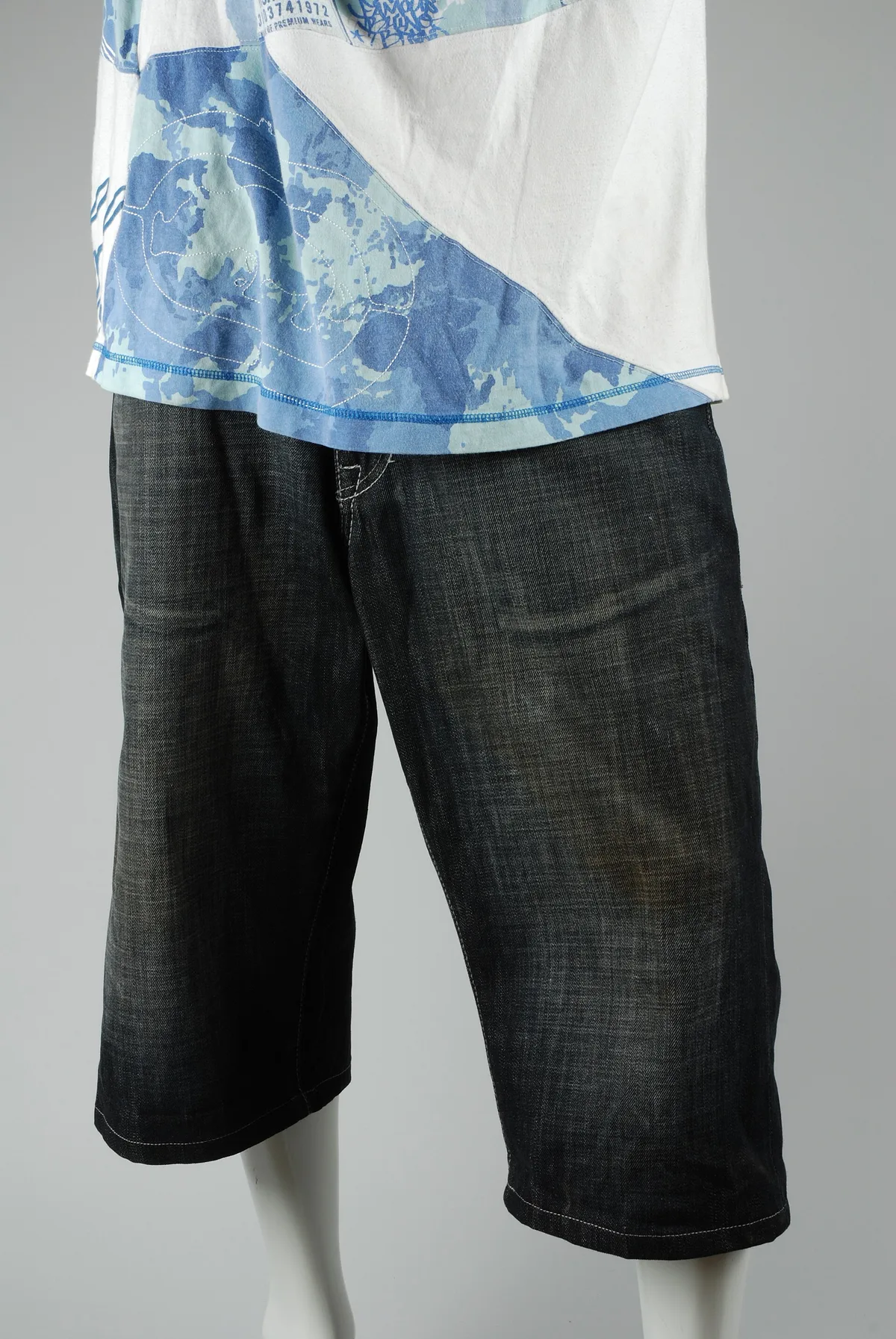
The straight cut lives or dies at two measurements: the thigh and the leg opening. In the shop, sit down — a straight jean that pinches the thigh when seated will blow out at the crotch seam within a season, whatever it cost. The leg opening on a true straight runs roughly 15 to 17 inches on standard men's sizes and should fall half over the shoe, not pool. Rise matters more than the label: a mid or high rise is what makes the straight line read intentional rather than dated.
Does the $300 jean ever make sense?
For a small group, yes: if you want rigid selvedge denim that fades into a personal record and can be repaired rather than replaced, the top tier is a hobby with excellent returns. For everyone else it is diminishing returns — the middle tier already contains the dye depth, the weight, and the fit engineering that make a straight jean look considered. Spend the difference on a second mid-tier pair in black and rotate.
How do you make any tier last longer?
Wash rarely, cold, inside out, and hang by the hem rather than the waist. Spot-clean between washes; indigo loses its depth in the drum, not on your legs. And skip the dryer entirely — heat is what blows out elastane and shrinks rigid denim a size that never comes back.
How many pairs of jeans does a wardrobe actually need?
Two, for nearly everyone: the argued core is one indigo straight for the week and one black for evenings and travel days. The indigo pair carries the middle-tier argument above — rope-dyed, 12 to 13 ounces, rigid — and does the visible work of the wardrobe. The black pair can honestly sit a tier lower, because black denim is dyed with surface sulfur chemistry at every price point: it fades to charcoal regardless of tier, so the premium buys little there. Buy the black pair for fit, not fabric, and spend the saved budget on the indigo. A third pair is defensible only for a specific gap — a lightweight pair under 11 ounces for real summers, or a relaxed cut for weekends if your weekdays demand tailoring. Beyond three, the closet is collecting silhouettes, not outfits, and each additional pair dilutes the wear frequency that justified the middle tier in the first place: a $150 jean worn weekly pays for itself; the same jean worn monthly is an expensive costume. The rotation math is the quiet argument underneath this whole guide — denim quality is a function of days worn, and days worn are a function of owning fewer, better pairs.
The thesis in one line: at $50 you buy the cut, at $150 you buy the fabric, at $300 you buy the story — and only the fabric shows in photographs.