Under $200, an everyday bag is a solvable problem: enough budget for full-grain or well-treated leather, solid hardware, and a shape chosen on purpose. This edit argues the case through five picks as market examples — prices verified against typical retailer listings at last check, February 2026 — each with a cheaper alternative and a reason it earns its slot. If you buy through links in our shopping guides, Zebule may earn a commission at no cost to you.
What does $200 actually buy in a bag?
Two things a $60 bag cannot carry: leather quality and hardware. At the low tier, bags are corrected-grain or bonded leather — sliced, pressed, and coated — with hollow, lightweight buckles and zippers that fail at the pull or the teeth within a couple of years. In the $120–$200 band at last check, you reach full-grain or top-grain leather that develops a patina instead of peeling, and metal hardware with some weight to it. Above $400 you are buying design houses, not durability; Census Bureau retail data has long shown personal accessories as a category where price and quality decouple quickly above the mid market.
The two failure points to check first
Everyday bags die in two places, whatever the price: the strap attachment and the zipper. Flip the bag over before you admire the front. Strap anchors should be reinforced — box-stitched through multiple layers or riveted through a leather tab, not a single seam through one layer. Run the zipper its full travel twice; it should glide without catching, and the tape should sit in a fabric channel, not be topstitched flat against the panel where stress concentrates. A $150 bag with riveted anchors beats a $350 one with single-stitched straps for daily carry.
The edit: five picks and their alternatives
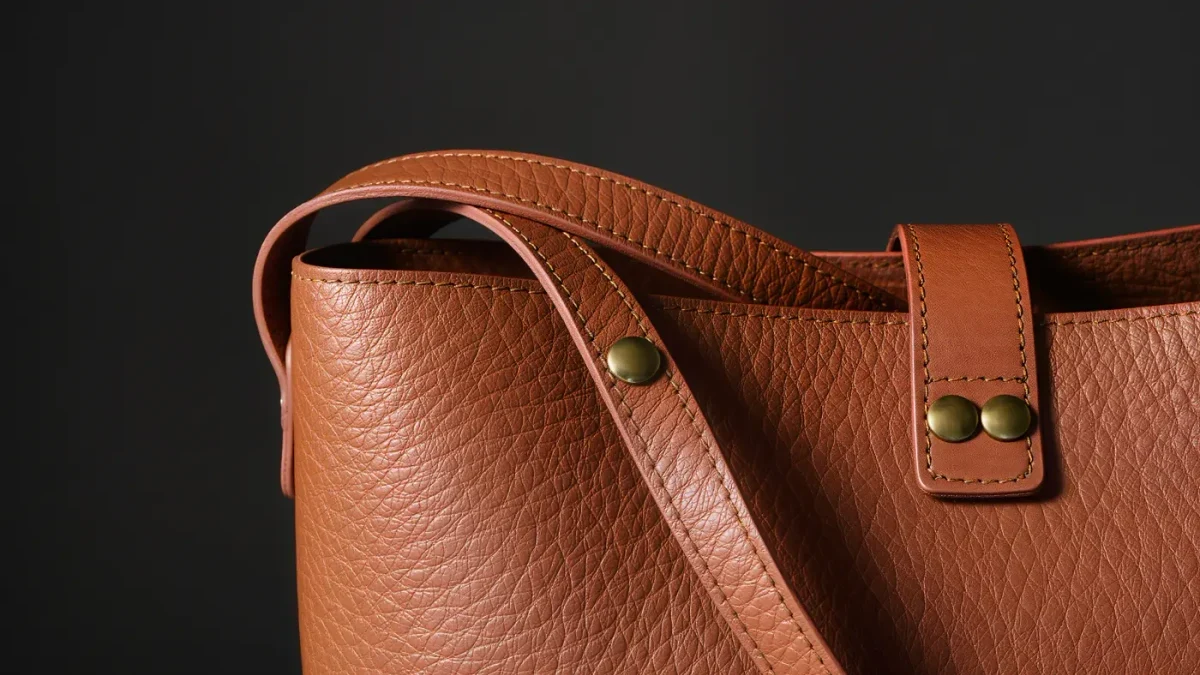
- The structured tote, around $180 at last check. The default answer for commuters who carry a laptop: a pebbled full-grain tote with a magnetic top closure and a sleeve pocket. The argument: structure is what makes a tote read as put-together after a year. Alternative: a coated-canvas tote at $70 holds shape nearly as well but will scuff permanently.
- The soft hobo, around $150 at last check. The counter-argument to the tote — slouch carries more than it appears to and packs flat for travel. Check that the shoulder strap is a single continuous piece, not two joined at the seam. Alternative: a nylon slouch bag at $50 is the honest budget pick and weighs nothing.
- The crossbody, around $130 at last check. The hands-free workhorse: a mid-size crossbody that fits a phone, a wallet, sunglasses, and a paperback. The adjustable strap is the whole purchase — test the slider under load. Alternative: at $45, a nylon crossbody is a legitimate daily that simply will not age as gracefully.
- The east-west shoulder bag, around $190 at last check. The shape argument: a long, shallow silhouette sits flat against the body and stops the contents-vault you dig through. Look for a wide strap that does not cut into the shoulder. Alternative: the same shape appears in vegan leather around $80 — fine until the coating cracks at the fold lines.
- The leather bucket bag, around $170 at last check. The flexible-capacity pick: a drawstring bucket swallows a sweater and sinches down for dinner. Test the drawstring closure with the bag half-full; cheap ones never close true. Alternative: a canvas bucket at $60, which stains — decide if that bothers you before it happens.
Which bag type covers the most lives?
The mid-size crossbody, on capacity-versus-occasions arithmetic: it works for weekends, travel days, and evenings, where a tote only does half that list. If you can own one bag under $200, the argument says crossbody; the tote is the second purchase, for the days that require a laptop.
How do you make a $150 bag last a decade?
Condition the leather twice a year, store it stuffed with tissue so it holds shape, and never hang it by the strap on a hook — that is how strap anchors fail in storage rather than in use. Keep it out of direct radiator and car heat; coated leathers especially cannot shed moisture the way full grain does. Rotate two bags rather than wearing one daily, and each will outlast the sum.
Which mistakes do buyers repeat with everyday bags?
Three, reliably. First: buying for the worst day of the year — the tote sized for a laptop, a gym kit, and a grocery run becomes the bag you carry on ordinary days, empty and caving at the sides. Buy for the median day, and let a canvas tote at $20 absorb the outliers. Second: confusing weight with quality. Hardware heft signals metal over plastic, true, but some of the heaviest bags in the mid tier are carrying their weight in unnecessary buckles and lining layers that add nothing to the carry. A bag's loaded weight is a daily tax; lift it packed before you commit. Third: ignoring the shoulder height of the strap. A crossbody that hits at the hip swings when you walk; one that ends at the waist stays put. This is a body-measurement question, not a style question, and it is the single most common reason a well-made bag gets retired early. Ask it in the fitting mirror with the bag loaded — wallet, keys, a paperback — because empty bags lie about how they hang. None of these mistakes costs more than a return shipping label to fix at purchase time, and all three cost a wardrobe a year of daily irritation when missed.
The thesis: under $200, spend on full grain and hardware, choose the shape for your actual week, and let the cheaper alternatives handle the trend experiments.