You have seen the same design at two prices in the same month — a wool-blend coat at $340 in one store, $250 at another, occasionally $199 once the markdown clock starts. None of those numbers is arbitrary. The spread comes from how clothing is actually sold: a wholesale price set a year out, a retailer's markup, a channel's overhead, and a promotional calendar that treats the ticket price as an opening position rather than a promise. Learning to read that spread is the single most useful skill in shopping.
Who sets the first number?
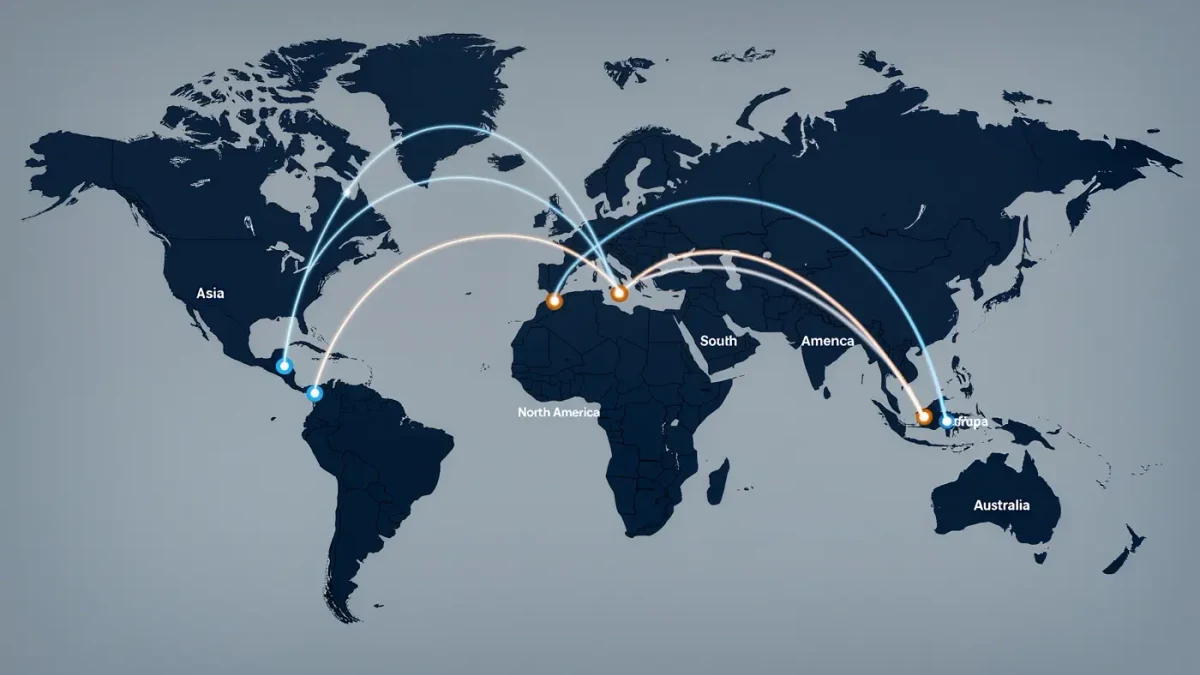
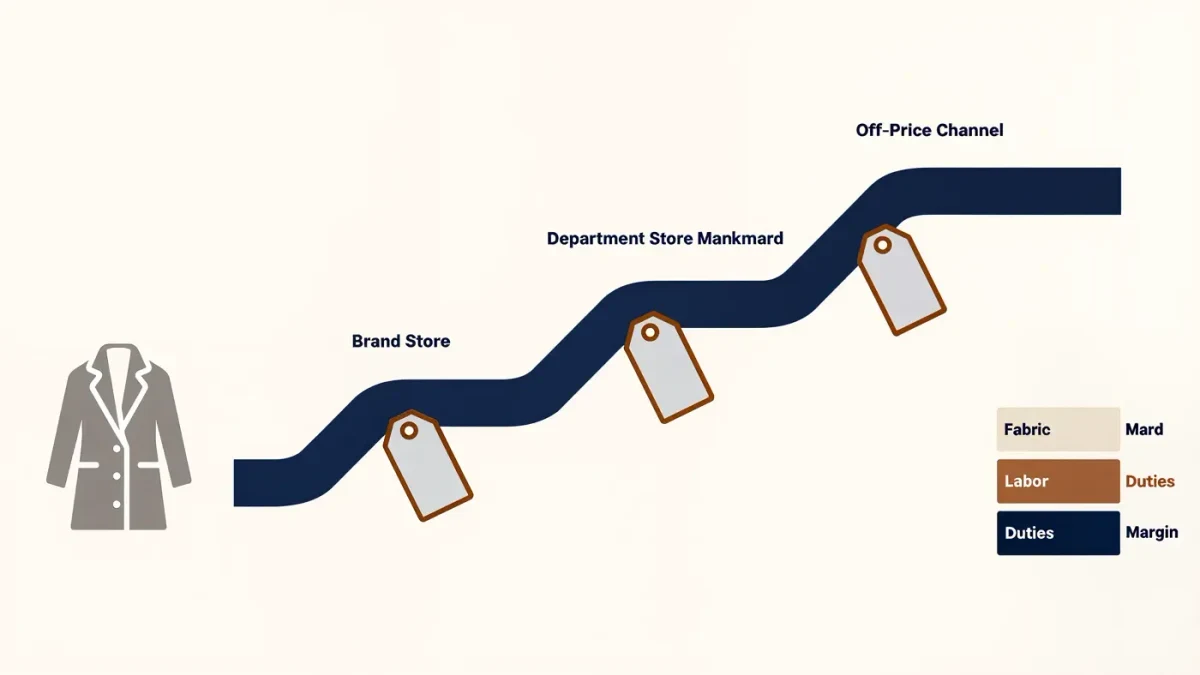
The brand, roughly a year before you see the coat. A wholesaler sets a price to retailers that must cover fabric, labor, duties and logistics — and in the 2025-2026 tariff environment, that import-duty line has grown visible: analyses published through 2026 estimated tariffs had added around three percentage points to US goods prices, with apparel among the exposed categories. The retailer then applies its own markup, often in the two-to-two-and-a-half times range at full-price department and specialty retail. From there, the price you are shown depends on who is selling: a luxury e-tailer protecting image holds the ticket; an off-price chain that bought leftover inventory at a discount can sell the same garment far below ticket and still profit.
Why does the same size sit at different prices at once?
Because 'the price' is really three different decisions made by three different owners of the inventory. The brand's own store sells at ticket to protect wholesale relationships. A department store may hold ticket for the first weeks of season and then take progressively deeper markdowns — its calendar, not the coat's quality, decides when. An off-price retailer or marketplace seller bought its stock at a different cost and can price aggressively from day one. So the $340, $250 and $199 coats can be literally the same object in the same week; what differs is who bought it, when, and at what cost.
What this means for your wallet
Three habits follow directly from the mechanics. First, treat the ticket as a starting position: most full-price apparel in the US sells through on promotion at some point in its season, so the informed default for non-urgent purchases is to wait for the first markdown cycle — usually weeks, not months, after a seasonal arrival. Second, know the exceptions: entry-price basics, collaborations and best-selling sizes in core colors are precisely the items that rarely reach clearance, because brands deliberately underbuy them. Third, read the spread as information: when one retailer discounts a style deep while others hold the ticket, it usually signals overbought inventory in that channel — meaning more downside to come, not a limited bargain.
Does a higher price ever buy a better coat?
Sometimes — but the map is uneven. Within one brand's line, higher prices generally do buy better cloth and construction. Across brands, the correlation breaks down: wholesale cost is dominated by fabric and country of origin, while retail price is dominated by positioning. That is why a $250 coat from a workwear label can outperform a $700 coat from a lifestyle brand on fabric weight and seam density. The check is physical, not financial: feel the wool's weight, look at seam allowances, count the buttons' material — the coat itself tells you where the money went, before the ticket does.
The takeaway
The spread on a single garment is the retail system made visible: cost, channel and calendar stacked into one number. Shoppers who know the stack stop paying for positioning by accident — and start paying only when the garment, not the marketing, earns it.
Sources for this piece include Reuters business coverage of apparel retail.