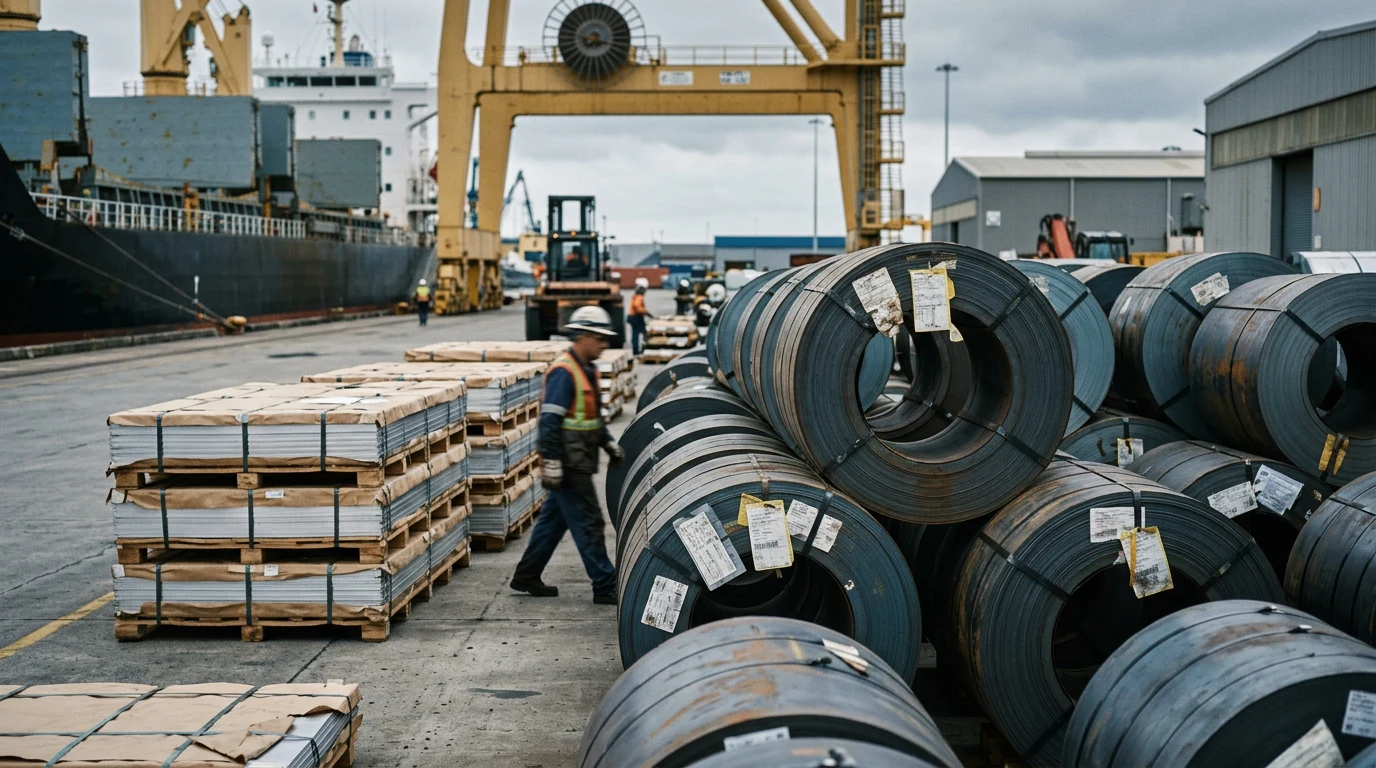
If your favorite retailer's summer 2026 prices feel higher than last year's, the trade data is on your side: per an analysis cited in a brands-and-retail roundup dated July 7, 2026, tariffs added roughly 3.1 percentage points to American goods prices, with shoppers ultimately bearing the cost. Separate academic work from Harvard economist Alberto Cavallo, tracking about 350,000 products, has shown tariff costs reaching retail shelves rather than being absorbed in supply chains. For clothing — an import-heavy category where most garments cross a border before they reach a rack — that pass-through shows up faster than in almost any other part of a wardrobe budget.
Zebule reports prices and policy, not advice: this is a factual look at tariff pass-through as documented in early July 2026, not guidance on what to buy.
What does '3.1 points of pass-through' actually mean?
It means tariffs are no longer a supply-chain rumor. When import duties rise, a brand has three options: eat the cost out of margin, squeeze its suppliers, or raise shelf prices. The 3.1-point figure reported in the July 7, 2026 roundup indicates that, across goods, a meaningful share of the duty has been pushed into the prices shoppers actually pay. Cavallo's Harvard Working Knowledge analysis reached the same conclusion at the product level: contrary to early hopes that retailers would absorb tariffs, price increases appeared quickly in tariff-exposed categories.
Why clothing feels it first
Apparel is uniquely exposed. The United States imports the overwhelming majority of the clothing it sells, from countries that were hit with layered duties through 2025 and 2026, and garments have thin margins relative to their price — a $40 knit cannot quietly absorb much duty before someone flinches. The industry's own forecasts have been blunt: analyses circulating through the trade press in 2025 and 2026 projected cumulative apparel price increases in the range of 10 to 20 percent if full pass-through played out, and Business of Fashion's State of Fashion 2026 reporting found US apparel prices had already risen 1.3 percent between January and July 2025, with 55 percent of executives expecting further increases. The 2026 data suggests that expectation has been materializing.
What this means for your wallet
Three practical reads. First, the increases are uneven by design: entry price points — the $12 tee, the $50 sneaker — are defended hardest because they are advertised, while mid-tier and premium items take the duty in visible increments. The gap between a basic and its 'better' version is widening partly because of trade policy, not just brand strategy. Second, sourcing shifts are reshaping what is on offer: retailers have moved orders toward countries with lower duty rates, which changes fabric mixes and lead times even when the sticker price holds. Third, timing matters: per US Census and Bureau of Labor Statistics data cited across 2026 coverage, apparel CPI has been drifting up through the first half of the year — which historically makes pre-season purchases and end-of-season clearance the value windows worth planning around.
Will prices come back down if tariffs fall?
History says slowly, if at all. Retail pricing is sticky upward: once a brand resets a $95 jacket to $110, the new number becomes the anchor for the next season's collection, and markdowns are calculated from it. Court challenges to the 2025-2026 tariff program kept the policy environment uncertain through the first half of 2026, but the pass-through documented by July 2026 — the 3.1 points — reflects prices already set. Any relief would show up first in promotions, not in the ticket.
What to watch next
The monthly CPI releases through the rest of 2026 will show whether apparel continues to outrun general goods inflation, and the fall earnings season will reveal which brands are protecting margin versus protecting share. For shoppers, the item-level tell is fabric composition on the same style season over season — a quiet indicator of sourcing changes the price tag does not mention.