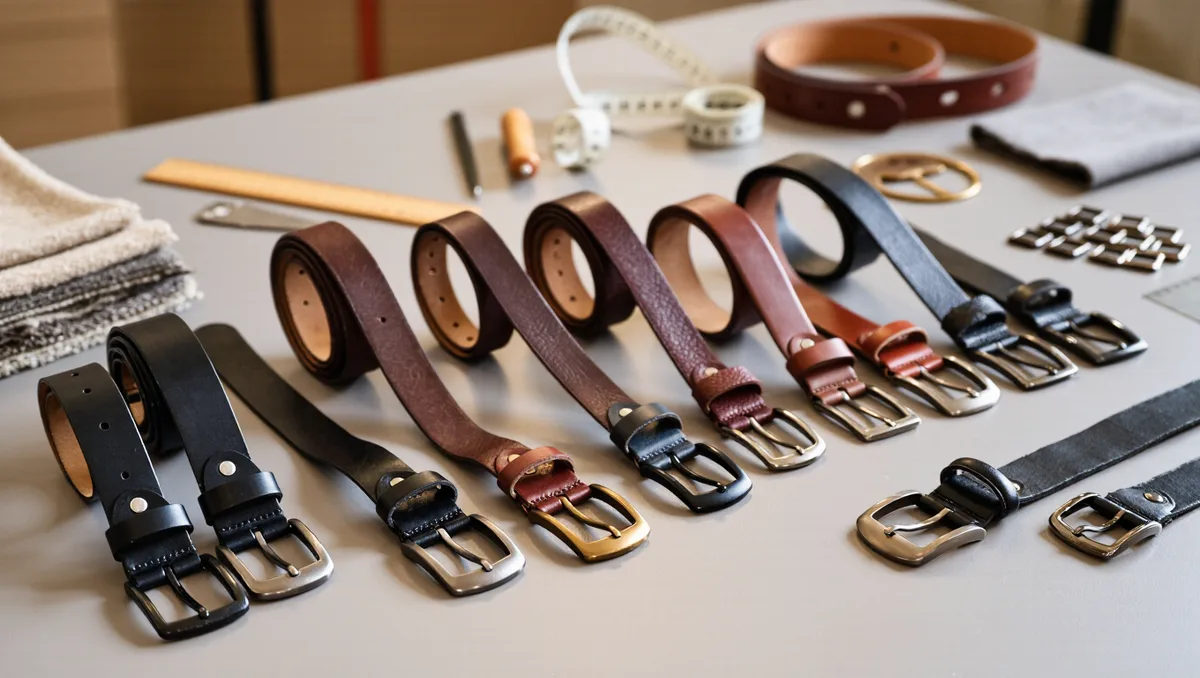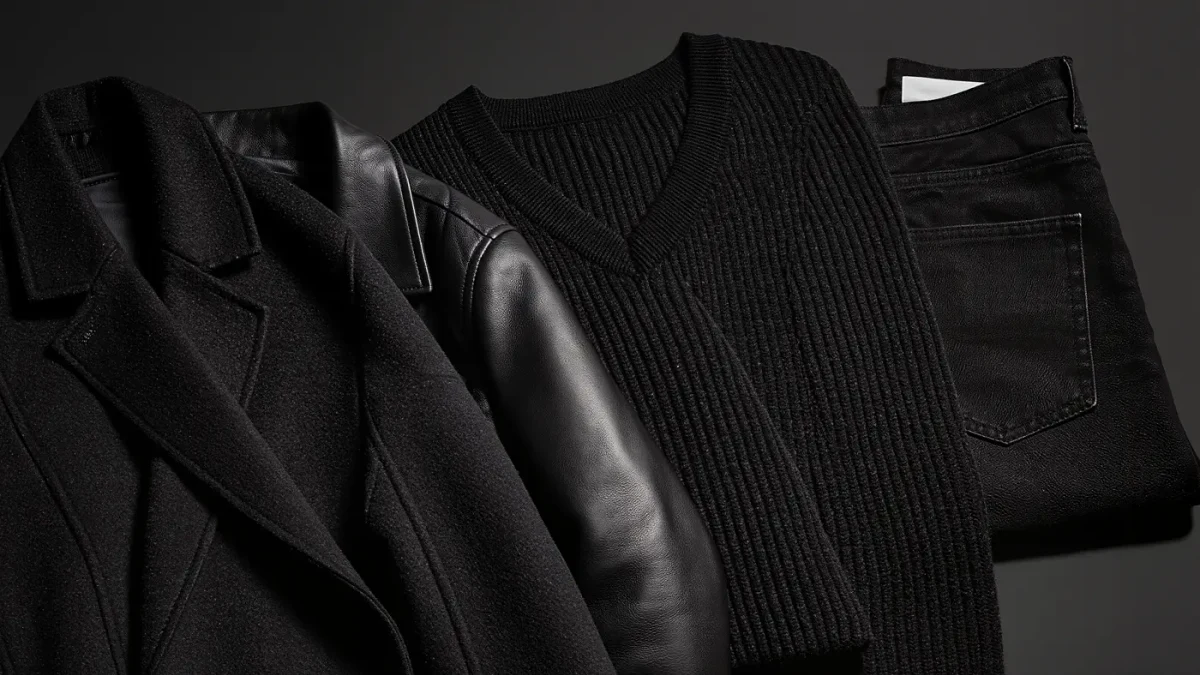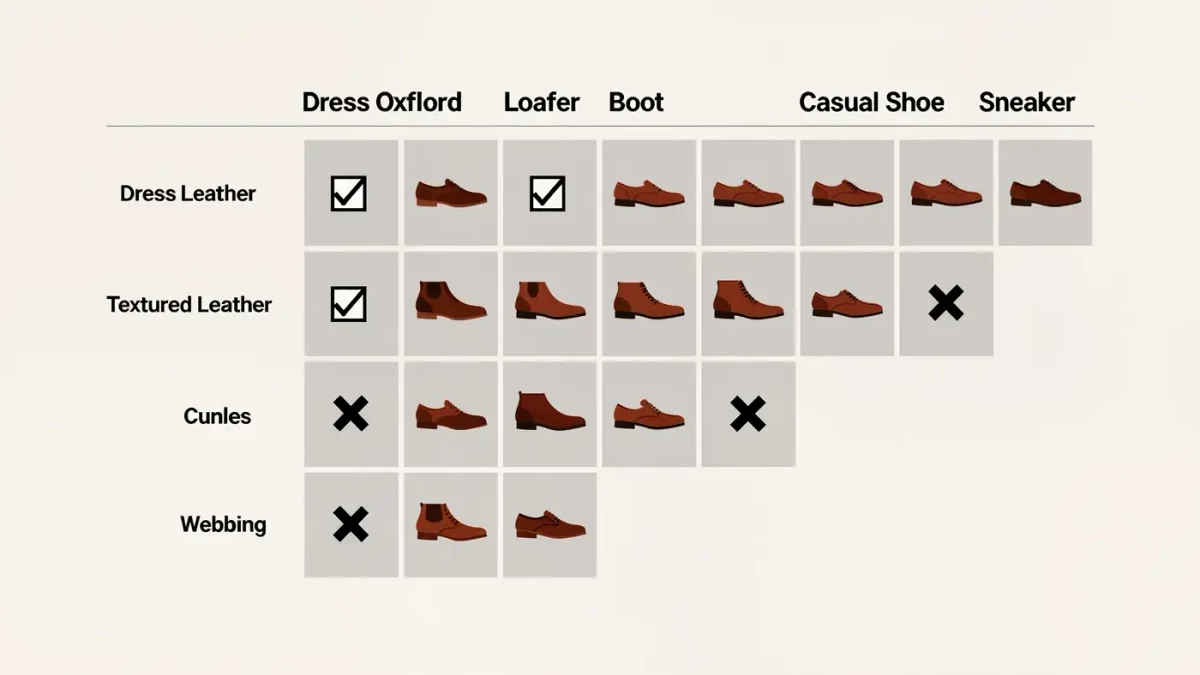
The belt-and-shoes rule is real but narrower than it is usually applied: match the color family — black with black, mid-brown with mid-brown — match the formality, and match leather to leather where the outfit is formal. Everything beyond that is optional, and knowing where the rule ends is what separates a considered outfit from a uniform one. Start with the two-axis test below; it resolves most belt questions in seconds.
Zebule publishes information, not styling or shopping advice; treat the rule as a convention of dress, not a law of taste.
What does matching actually mean?
- Match on two axes: color family and formality. A dark oak belt with dark oak oxfords passes; a dark oak belt with black oxfords fails on color; a glossy black dress belt with matte black suede sneakers passes color but fails on formality. The second axis is the one people forget, and it is the one that actually decides.
- Match the tone, not the dye lot. Cognac and chestnut are both mid-browns and pair fine; demanding an exact shade match between a belt and a shoe is a level of sameness that reads dated. Tone-adjacent is the standard the rule ever meant.
- Match leather to leather only where the outfit is formal. Suit, dress shoes: leather belt, yes. Everything else — the rule loosens progressively, as the steps below show.
Matching done this way changes nothing visible except coherence: the belt stops being a question. Skip the exact-match shopping entirely; two pieces bought to be identical usually age differently anyway and end up mismatched within a year.
Where does the rule end with casual outfits?
- With white sneakers or any rubber-soled casual shoe, drop the belt question entirely. Sneakers read athletic, athletic wear pairs with webbing belts, no belt, or the trouser's own drawcord — leather matching does not apply to a shoe whose formal register is 'none'.
- With boots and workwear, match material mood instead of color. Rugged matte leather beside rugged matte leather works in any brown; the texture agreement carries the outfit where a color chart would not.
- Let the watch strap, not the belt, be the tie-breaker. A casual outfit with a leather-strap watch benefits when the strap, belt, and shoe share a rough family — but a canvas NATO strap releases all three from the rule at once. The strap is the smallest leather decision, and it sets the bar the other two need only approximate.
The casual rule ends where the leather does: the convention exists to unify formal leather goods, and where the goods are not formal, forcing the match is what actually looks wrong — the overly matched casual outfit reads as borrowed clothes.
Do the belt buckle and shoe hardware need to match?
- In formal dress: yes, quietly. A silver-buckled belt with silver-toned oxford eyelets, a gold-buckled belt with gold-toned monk straps. The match should be perceivable, not pointed — nobody should register the hardware, only feel that the outfit coheres.
- In everyday dress: approximately. Brushed and polished metals of the same family pass. Mixed-metal dressing is accepted in watches and jewelry, and the belt buckle sits inside that tolerance.
- Skip hardware matching entirely for casual outfits. A matte black buckle over brown sneakers offends nobody; the formality gap already decided the outfit's register.
Hardware matching is the last remnant of the formal rule, and it matters exactly as much as the outfit's formality — no more. Skip it before it starts deciding outfits for you.
What about black shoes with a brown belt — ever?
Almost never in formal or business dress: black shoes pull the outfit's darkest anchor, and a brown belt — even dark brown — breaks the vertical line the eye runs from shoe to belt. There is one working exception: a belt so dark brown it reads black at conversational distance, which is how many people accidentally comply with the rule while owning one belt. Treat that as a stopgap, not a strategy. The second exception is deliberate contrast in casual wear, where black shoes and a tan belt can work — but it works because the outfit is already casual, not because the rule allows it.
How many belts make the rule effortless?
Three: a black dress belt with a polished buckle, a dark brown belt that covers the mid-brown family from chestnut to oxblood, and a casual belt — webbing, canvas, or matte rugged leather — that pairs with everything informal. Three belts cover the whole rule with its exceptions built in, and buying more is about buckle taste, not coverage. The practical test when dressing: if belt and shoes agree on family and formality, the question is closed in two seconds — and that speed is the rule's real purpose.
Sources for this piece include BBC Culture's writing on dress and style conventions.