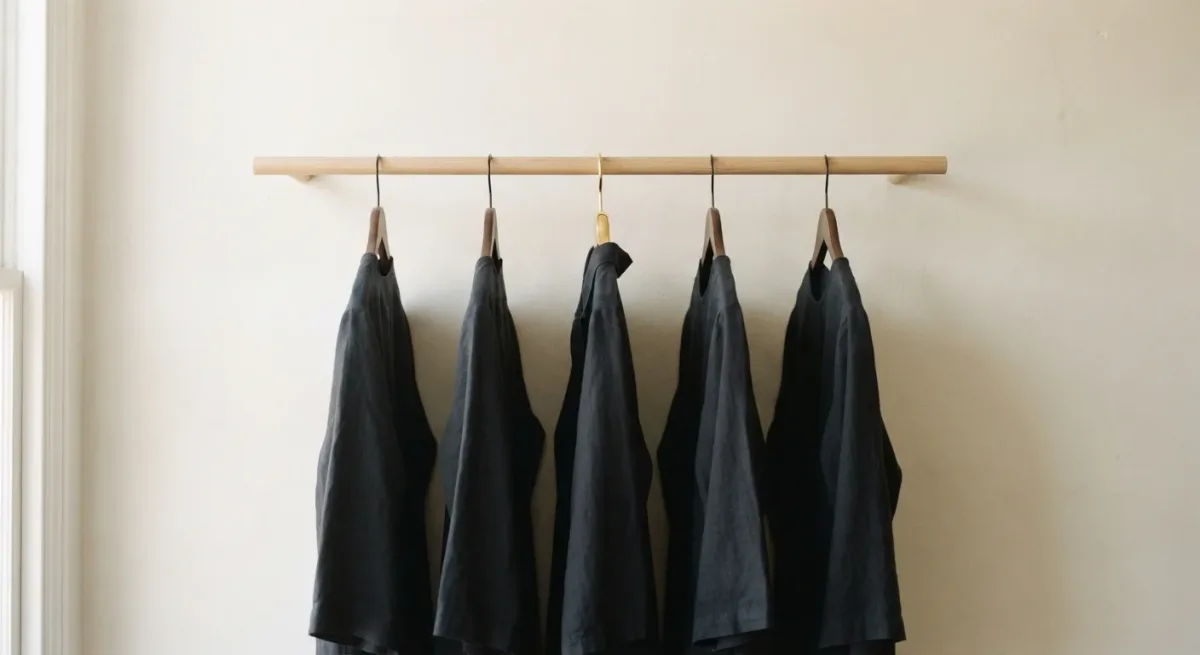
The case for a personal uniform is a budgeting argument: attention spent choosing clothes each morning is attention not spent on anything else, and a fixed outfit spends it once. The most quoted defense remains Barack Obama's, explaining to Michael Lewis, writing in Vanity Fair in 2012, why he wore only gray or blue suits: "I'm trying to pare down decisions. I don't want to make decisions about what I'm eating or wearing. Because I have too many other decisions to make." The psychology he was gesturing at has a name — decision fatigue — and a research literature that, while contested in its details, consistently links repeated choice-making with degraded later choices.
This is a column, and the stance is the desk's: a uniform is a tool worth taking seriously, not a personality to copy. Here is the argument and its honest limits.
The wearers of famous uniforms chose them with unusual clarity. Steve Jobs's black Issey Miyake turtleneck came from a trip to Sony's headquarters in the early 1980s, as Walter Isaacson's 2011 biography records — Jobs saw a uniform-inspired culture, asked Miyake to make him a personal version, and ended up, by his own count, with enough identical turtlenecks to wear one every day of the year. The lesson is not the turtleneck. It is that Jobs treated a repeated garment as manufactured infrastructure: one decision, amortized across a decade. The costume designer Edith Head said something similar about her own severe uniform of tailored suits, and the architect Le Corbusier ran his dark suits, round glasses, and bow tie on the same logic for half a century.
What the uniform buys is more than attention. Consistency is cheap: worn daily, a small set of good garments costs less per wear than a large wardrobe of cautious purchases — the arithmetic behind the long-standing cost-per-wear rule that personal-finance and style writers share. Consistency is also legible. A person who always appears in the same register is read as deliberate; the register itself becomes the signature, the way the painter Ad Reinhardt's near-identical black paintings of the 1960s made repetition itself the recognizable gesture.
The honest limits are three. First, a uniform only works if the clothes are genuinely good at their job — comfortable across seasons, durable enough to survive daily wear, and repairable, because a uniform fails when the single excellent trouser wears out and the pattern is broken. Second, the uniform is a privilege of context: workplaces and cultures read sameness differently, and the office that rewards Jobsian consistency is not the one that rewards a rotated wardrobe. Third, and most honestly, the uniform sacrifices a real pleasure. Dressing is play for many people, and no budgeting argument abolishes that. The desk's position is narrower than "everyone should": it is that anyone who feels morning choice as a cost rather than a pleasure has a documented, dignified alternative with a respectable lineage.
How to build one, if the argument lands: choose a register you already reach for on low-effort days — those choices are data. Reduce it to a formula in three or four slots (trouser type, top type, layer, shoe) with two or three approved items per slot. Then wear it without apology, and re-evaluate seasonally, not daily. Obama's suits again: the point was never the gray. The point was the settling of a question that did not need to be open.
For more context, read How to read a clothing label before you buy — Style.